Saturday, 8 February 2014

Mosquito-borne illness that makes people bend over in pain likely on way to U.S.

A mosquito-borne illness that makes its victims stoop over in intense pain has made its way from Africa to the Caribbean and likely will reach the U.S. soon, scientists have found.
The first case of chikungunya fever in the Western Hemisphere was confirmed on the Caribbean island of Saint Martin in October, and by December 48 cases had been confirmed. In the weeks since more than 1,000 cases have been reported in the islands as it inches closer to the U.S., Scientific American reports.
The viral illness is rarely fatal, but it causes fever, headaches and severe joint pain for about a week.
The disease was first seen in Tanzania in 1953 and has since been seen in epidemics in Africa, Asia and parts of Europe. There is no specific treatment for the illness, though its symptoms can be lessened through treatment, according to the Centers for Disease Control and Prevention.
Officials with the CDC told Scientific American that the disease likely will reach the U.S. Virgin Islands and Puerto Rico and, eventually, the continental U.S.

Mosquito Sperm Follow Their “Noses” to an Egg


Photo of a mosquito.
A female mosquito readies herself for a blood meal. Photograph by U.S. Centers for Disease Control and Prevention/PHIL/Corbis
Insects are plenty strange: Certain individuals eat their mates, doting parents bury offspring with carcasses, and sometimes dinner means sucking liquefied organs through a straw.
Now it gets even weirder. Researchers have found that mosquito sperm contain proteins that enable them to smell their way to a waiting egg.
Many insects have these proteins—known as odorant receptors—on their sperm, as well as in their antennae, where they use them to sniff out dinner. But researchers weren’t sure what these odor proteins did when they appeared on sperm.
new study—published online February 3 in the journal Proceedings of the National Academy of Sciences—shows that the proteins on the sperm cells of Anopheles gambiae, the mosquito that carries malaria, respond to chemical cues and tell the sperm when it’s time to get a move on. (See “Nazi Scientists May Have Plotted Malaria Mosquito Warfare.”)
“Female [mosquitoes] mate only once in their life,” says researcher Laurence Zweibel of Vanderbilt University in Nashville, Tennessee. And they store that sperm for the rest of their lives in special organs, he explains. Female mosquitoes use only some of the sperm each time they have a blood meal to create an egg.
“[Then] the sperm have to go from this inactive to active state,” says Zweibel. “You don’t want the sperm, which has a limited amount of fuel in the tank, to be beating its tail unnecessarily without any egg around. You need to have a mechanism where you only turn on the engine of the car when you’re getting ready to start the race.”
That mechanism, it turns out, are these odorant receptor proteins, which Zweibel and his team showed cause a strong response in the sperm to chemicals from a female mosquito’s ovaries. It’s the first time these proteins have been shown to have a function outside of the sensory system in insects.
Get a Move On
Not only do the sperm use their sense of smell as an on-off switch, they may also be able to follow their “noses” to the egg. “The female produces these signals to say to the sperm, ‘OK, I need some of you guys to get your act together,’” Zweibel explains. The researcher and his team also believe those chemical signals tell the sperm where to go—a kind of “here I am, come get me” signal, he says.
Zweibel’s lab colleagues stumbled on this mechanism during their many years of trying to develop mosquito repellents by disrupting an adult mosquito’s sense of smell. “Not to turn it off,” he says, “but to turn it hyper on.” He likened the method to overwhelming a human by shouting at her at the top of his lungs. “I call it the New York system,” the native New Yorker added. (See“New Mosquito Repellant Made, ‘Better Than Anything Else.’”)
A similar technique could render mosquitoes sterile by overwhelming the odor receptors on their sperm. “These processes have to be done at the right time in the right amount to provide this activation. Too much, too little, or at the wrong time” could make successful mosquito reproduction impossible, Zweibel says.
Finally, the study could have implications beyond just the malaria mosquito. Odor receptors have been found on insect sperm belonging to bugs of all kinds. Now that researchers know a mosquito sperm can “smell,” Zweibel thinks it’s just a matter of time before scientists find similar mechanisms on other species’ sperm.
“We’re looking at every insect we can get our hands on,” the researcher says. “We’ve looked in ants, bees, and we see [these proteins] all over the place.”
Rachel Kaufman

Hundreds of Thousands of Mosquitos below ground


James Logan, a biologist at the School of Hygiene and Tropical Medicine also tried leeches and is thinking about maggot therapy
Interview by 
James Logan
James Logan gets up close with mosquitos at the London School of Hygiene and Tropical Medicine. Photograph: Antonio Olmos for the Observer
A lot of people don't realise that just one metre below your feet walking along Gower Street or Malet Street in London, you have thousands upon thousands of very hungry, potentially dangerous insects.
In the basement we have our insectary colonies where we keep lots of different species of mosquitoes, found in all parts of the world. None of them are infected with malaria, but they are in very high numbers. We also have bed bugs, house dust mites, cockroaches, and house flies, among other insects.
I'm a senior lecturer at the London School of Hygiene and Tropical Medicine, where my speciality is medical entomology. I run a research group where we investigate new ways to control diseases spread by insects, such as malaria, dengue fever and other parasites. Out of pure interest – and because I like self-experimenting – I gave myselfhookworms.
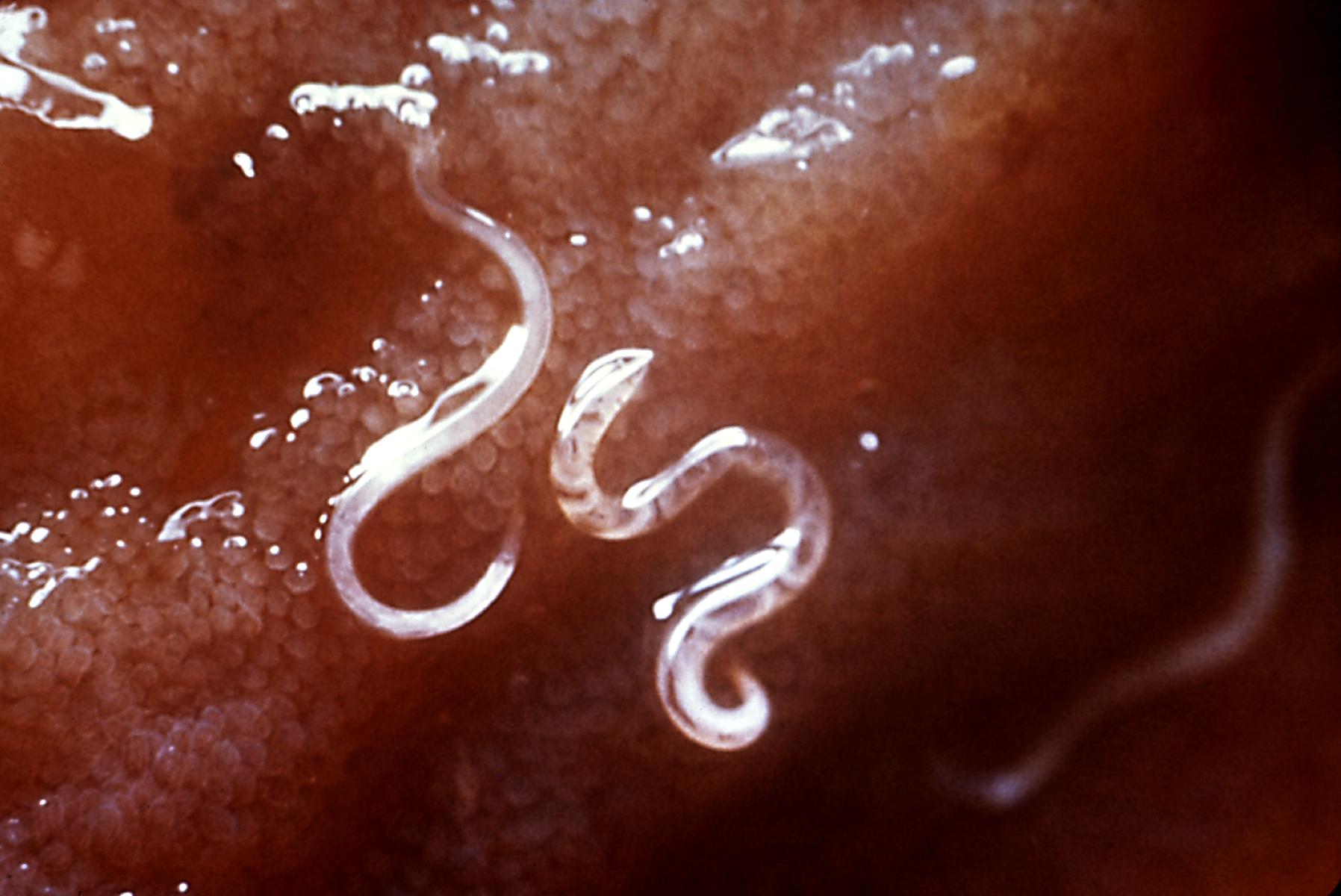
hook wormHook worm. Photograph: Sebastian Kaulitzki/Alamy
Hookworms are known to have surprising positive effects on your body. They modify the immune system, although this is a fine balance because if they modulate it too much you become ill, and if they don't modulate it enough, you'd get rid of them. But by suppressing the immune system, they have been shown to have a beneficial effect on diseases such as Crohn's, irritable bowel syndrome, asthma, and there's even a clinical trial looking at effects onMS. Maybe if we understand the science of how these worms do this, we could develop a drug which could mimic them.
For some years I've had a food allergy where I can't eat bread without feeling ill. So partly I just wanted to find out if the rumours were true and whether the worms would help me, but we also filmed them using a special camera which is usually used to look for skin cancer.
It's basically an ultrasound machine which allowed us to visualise a section through the skin, so we were able to see how the worms entered my arm, and moved through the layers. It was previously unknown how long they took to penetrate the skin, and it was thought that perhaps they hang around in the layers of the skin for some time.
When the worms enter the body they're microscopic. Normally you get them by walking around barefoot in infected areas, which is why children get them quite a lot in developing countries because they are often sitting on the ground. In the lab, we put them on to my arm in a droplet of water.
In no time at all, they started burrowing in, far quicker than anybody would have thought. While they were burrowing I could feel very slight nips. Using the camera we could see them move through the skin, and again, that happened much faster than people had thought, which was a new finding.
Then they make this incredible journey through the body. They go in the bloodstream, through the heart, to eventually burst through the lungs. You develop a bit of a cough, so you hack them up then you swallow them into your stomach. I kept thinking: "Am I coughing up worms?"
When they reach the stomach they develop into adults, where they hook on to the gut wall and suck your blood. They produce saliva which is injected into the bloodstream, which is what modulates the immune system so that you don't get rid of them.
Remarkably, the hookworm therapy actually worked. I had a good few weeks of scoffing pizza and garlic bread, which was just brilliant, but after about four weeks I started to develop really severe stomach pains. It was horrible, excruciating, and reached the point where I was unable sleep. It was making me feel ill and dizzy, and at one point I was on the verge of giving up and saying this is just enough.
A couple of days later I swallowed a pill-sized camera, so we were able to see the hookworms in place. But we were also able to see their path of destruction. There were lots of round, red wounds on the inside of my stomach wall in the shape of their mouth parts where they had been attached. This worried me, because some of them looked like ulcers. The specialist gastroenterologist we were speaking to said that if I went to him with all these symptoms, he'd be incredibly concerned.
Despite this, I actually spent a long time debating whether or not to get rid of them. I thought the likelihood was that this will all settle down eventually, my body will adjust and it will go back to how it should be – meaning I could continue to eat bread. However, my wife was unconvinced. She didn't really like the thought of sleeping in a bed beside somebody infested with worms. So after two months of being infected, I took the pill and got rid of them. I probably would do it again, but there would have to be a good reason, such as if there was a new aspect to hookworm biology that we didn't know about, or if I decided I wanted to eat bread again.
Leech therapyLeech therapy. Photograph: Hans-Joachim Schneider/Alamy
Since the hookworms, I've also tried leech therapy to help cure a muscle injury. There's anecdotal evidence that leeches can help by stimulating the flow of blood through the muscle, helping it to heal. So I gave it a go when after four months of physio a quad injury wasn't getting any better. I let three leeches feed on my leg for about an hour, until they were the size of big sausages, full of blood. Amazingly, about a week later my injury had disappeared. Whether it was coincidence or not, I don't know, but it certainly raises the possibility.
The next thing I want to experience is maggot therapy. I want to know what it's like, whether you can feel it, and how effective it actually is. I'm not sure how that'll work out.

Tuesday, 26 November 2013

Cheryl Cole Supports Malaria Vaccine

Cheryl Cole Supports Malaria Vaccine by WENN | 08 October 2013 Picture: Cheryl Cole - Cheryl Cole arrives at Los Angeles International Airport on a flight from London - Los Angeles, CA, United States - Thursday 15th... British pop star Cheryl Cole has thrown her support behind plans to market the world's first malaria vaccine following her fight with the disease.

The singer cheated death and spent days in an intensive care unit in July, 2010 after contracting the mosquito-borne illness during a charity trip to Tanzania. She has now spoken out to show her backing for bosses at pharmaceutical giant GlaxoSmithKline, who are currently seeking regulatory approval to manufacture the world's first malaria vaccine after trial results proved it dramatically reduced the number of cases in African children. Cole took to Twitter.com to post a link to an article on the vaccine and to share her support, writing, "Oh my god. I pray that this works out!! Please god." Malaria kills hundreds of thousands of victims every year.

Saturday, 23 November 2013

Africa Kicks Malaria


AFRICA KICKS MALARIA: 

HOW SOCCER STARS ARE OUTSCORING MALARIA

Last summer the Confederation of African Football, or CAF, (think FIFA, but African) endorsedUnited Against Malaria partnership - of which Malaria No More is a key member - as a premier social cause of the most-followed events in Africa: the 2013 Cup of Nations (AFCON) soccer tournament.
The most revered champions of Africa’s best loved sport talking about malaria during Africa’s most watched public events? A captive audience of 6.6 billion people, most of them living in malaria-endemic Africa? What could be more captivating!
The biggest names in African football (that’s ‘soccer’ to you, U.S. followers) and the top political leaders in Africa’s malaria fight signed onto the campaign, and lent their time to record public messages about malaria for their African audience.  These include five elite footballers and five African presidents, including football legends Didier Drogba and Samuel Eto’o, and the first-ever female African head of state, Liberian President Ellen Johnson Sirleaf.   TV, radio ads, and billboards were created which feature the players and presidents, targeting policy-makers and decision makers about investments in malaria programs, as well promoting calls-to-action with simple steps to prevent and treat malaria.
Didier Drogba's Malaria Prevention PSA

To ensure these malaria messages are heard by football fanatics continent-wide, 10 pan-African TV/radio stations, including the biggest radio station in Africa and the official football tournament channel, advertisements in over 10 countries, and 75 billboards in more than 13 countries are helping get the job done.
In addition to the tremendous media support, the campaign launched at the African Union Summit to include more African Heads of State, and a TV spot about the campaign aired during the AFCON Draw and East Africa CECAFA tournament. During the AFCON games, the campaign will be included during AFCON half-times (when football fans are already tuned into watch their favorite footballers), in AFCON sportscasters’ dialogue during televised games, and at the AFCON Final Game’s closing ceremony? 
Soccer stars in malaria prevention billboards around Africa
For Africa’s social media users, a 2-minute quiz is available on the United Against Malaria Facebook page for the chance to win Drogba-autographed swag, like a football or a jersey.
Learn more about the campaign here and be sure to follow the AFCON games live atwww.supersport.com/live-video

Friday, 8 November 2013

In2Care Mosquito Trap


In2Trap outside view


A revolutionairy tool to combat dengue mosquitoes!
The In2Care Mosquito Trap is a unique mosquito control concept that integrates a novel trap 
with a customer-focused service component. The trap, which attracts mosquitoes ready to lay 
eggs, uses novel and green alternatives to insecticides, and is the first to 
exploit the concept of  autodisseminationbased on the unique egg-laying 
behaviour of the dengue mosquito. Moreover, it is also the first trap to use a 
biological control agent that kills mosquitoes 8-10 days after becoming infected inside the trap. 
This agent, once inside the mosquito, also inhibits development of the dengue virus. 
This means that after being contaminated it can carry a larvicide for 8-10 days to other 
breeding sites, which results not only in all larvae being killed inside the trap itself 
but also in the surroundings breeding sites. The attractiveness of the trap is enhanced
 through its size, colour and addition of specific odours. The service component consists 
of easy and quick to use refills (biocontrol agents and odours) that allow effective trap
 maintenance at 1-2 month intervals. Traps can be placed both in- and outdoors at a 
recommended density of 1/400 m2 . The In2Trap concept lends itself perfectly or use 
by pest control companies that offer mosquito control services to resorts, hotels, restaurants, etc. 
We can provide you with this product and additional services to make dengue mosquito 
control easy and green. Contact us for a turnkey solution for your dengue problem.
A detailed fact sheet on the In2Care Mosquito Trap can be found here! 
Poster In2Care Mosquito Trap October 2013